
Category: Projects
-
Artificial Intelligence, Real Citizens: Using AI to Co-Design Better Neighborhoods

Finding a common language – beyond technical jargon – is essential to enable citizen science. Visualisation can be particularly useful in this context when it comes to creating scenarios in urban spaces or at the neighbourhood level. With the help of artificial intelligence, scenarios can be created in near real-time by laypersons, which can form…
-
Study: How Youth Culture Shaped Urban Space in Vienna During the Pandemic
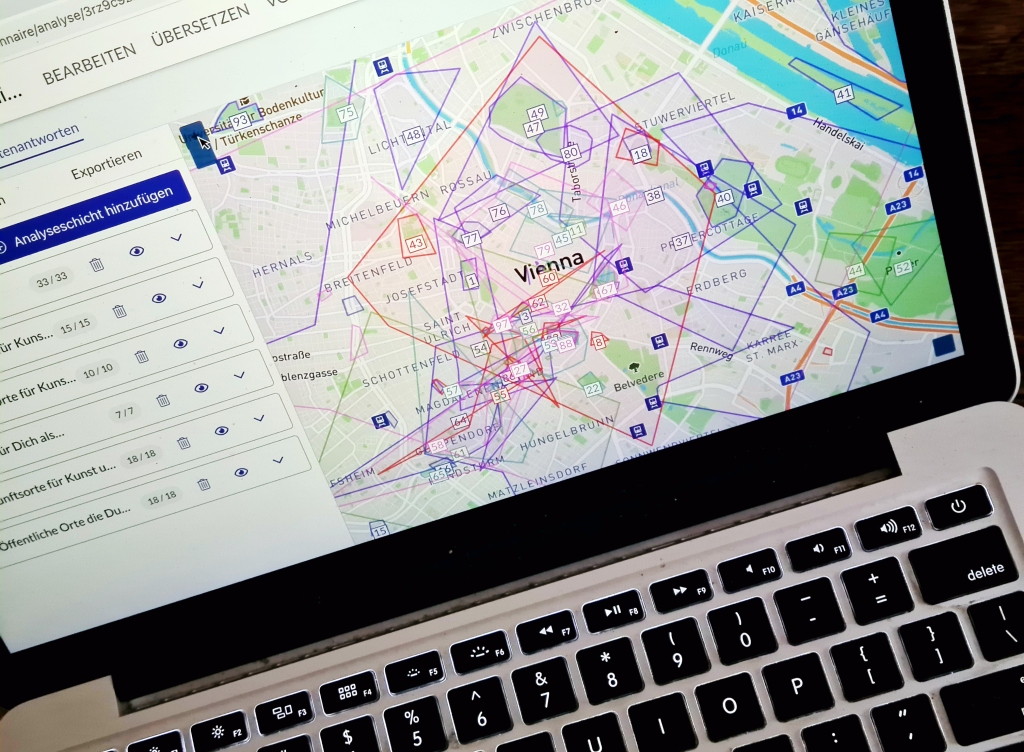
How did the pandemic change our urban spaces, and how sustainable was this development? The study investigates which places were frequented by young people during the COVID-19 measures in Vienna and how they were used and adapted for informal cultural and artistic activities. Using an online questionnaire or citizen engagement platform that also allowed geo-referenced…
-
GreenTwins Project Successfully Completed
The GreenTwins large pilot project was completed with great success at the end of August. GreenTwins developed digital participatory tools and processes and a dynamic green layer for Tallinn’s digital twin. The applications and tools developed in the project are used, for example, by the City of Tallinn, the European Green Capital of 2023. To…
-
GreenTwins Tallinn and Helsinki: Digital Twins for More Democratic, Resilient and Greener Cities.
Green spaces in cities are of particular importance in the face of ongoing urbanisation and the anthropogenic climate change. Urban greenery affects the physical and mental health of citizens. It reduces the immediate effects of global warming such as heat islands and improves the thermal comfort of cities. In addition, plants have an impact on…
-
The Digital Twin
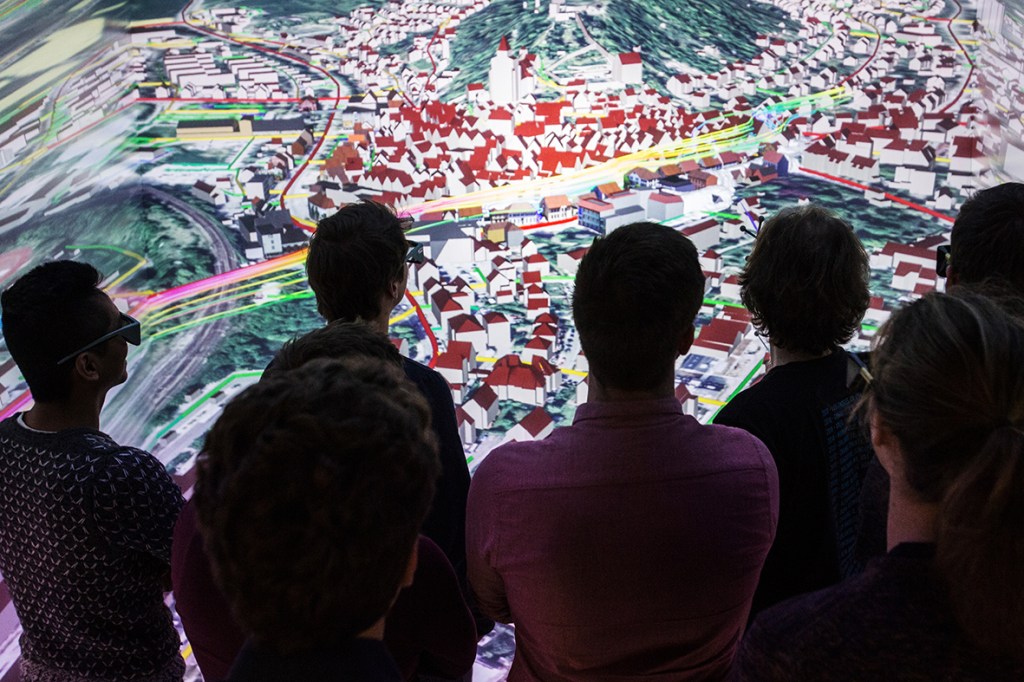
At the eCAADe+SIGRaDi 2019 conference in Porto we presented the Digital Twin of a German small town – a prototype for future evidence-based planning and urban design including collaborative and participatory processes. For the built environment’s transformation we are confronted with complex dynamics connected to economic, ecologic and demographic change (Czerkauer-Yamu et al., 2013; Yamu, 2014).…
-
Publication: Shaping Urban Change using Digital Tools

Digital tools offer great potential for cities and municipalities for developing and planning habitats geared towards actual peoples needs. The project Reallabor Stadt:Quartiere 4.0 (Living Labs Urban:Quarters 4.0) focussed on the impacts of the digital transformation on urban habitats and how digital instruments can be implemented in planning and decision processes. The new publication “Wandel…
-
Living Lab Urban:Quarters 4.0 at HLRS

The research focus of Living Lab Urban:Quarters 4.0 (Reallabor Stadt:Quartiere 4.0) lies on the development of digital tools to support citizens, planners, and decision makers with the aim of creating synergies and cooperation across complex and dynamic processes in the context of digital transformation. One of the major challenges is the linking of expectations and…
-
Clouds and Waves – Premiere in Münster (DE)

“Clouds and Waves” is a sound sculpture functioning as a temporary installation in space and imagination. The sculpture is formed inside the heads of the audience and interprets through the freedom of abstraction. As in life, a continuum is being created: a gentle beginning, a loud rearing up and a fainting dying away – an…
-
Grand Paris survey: How walkable is your neighborhood?

We realized a questionnaire in the framework of a scientific study with the focus on life quality and mobility in the surroundings of Paris’ most frequented ring road, the Boulevard Periphérique (between 1.1 and 1.2 million vehicles per day). Are you living in the metropolitan area of Paris? Take part in this online questionnaire and help us…
-
Turbine House

The existing building was designed by the Austrian architect Erich Franz Leischner (1887 – 1970) and erected between 1911 and 1913 to house a turbine. It was part of a water reservoir belonging to the Second Vienna Spring Water Main (II. Wiener Hochquellenwasserleitung) built during the last years of the Austrian-Hungarian Monarchy to supply the city with drinking water.…
 Fabian Dembski