
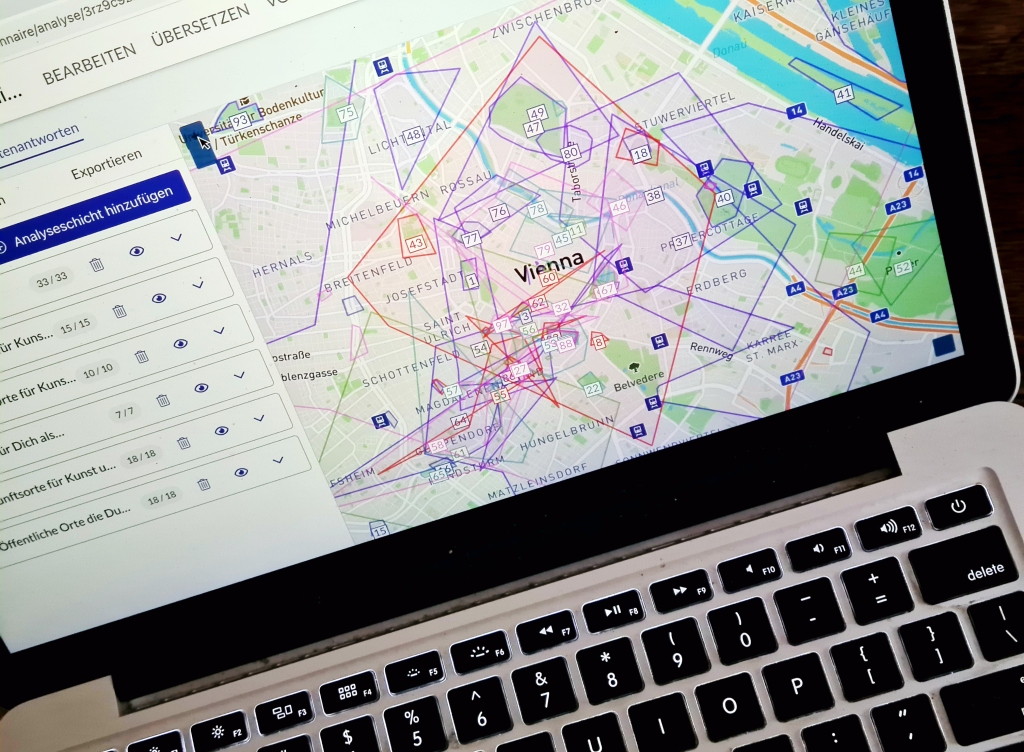
How did the pandemic change our urban spaces, and how sustainable was this development? The study investigates which places were frequented by young people during the COVID-19 measures in Vienna and how they were used and adapted for informal cultural and artistic activities. Using an online questionnaire or citizen engagement platform that also allowed geo-referenced answers, also the potential of public spaces for future cultural use was evaluated, integrating spatial, social, economic and safety aspects.
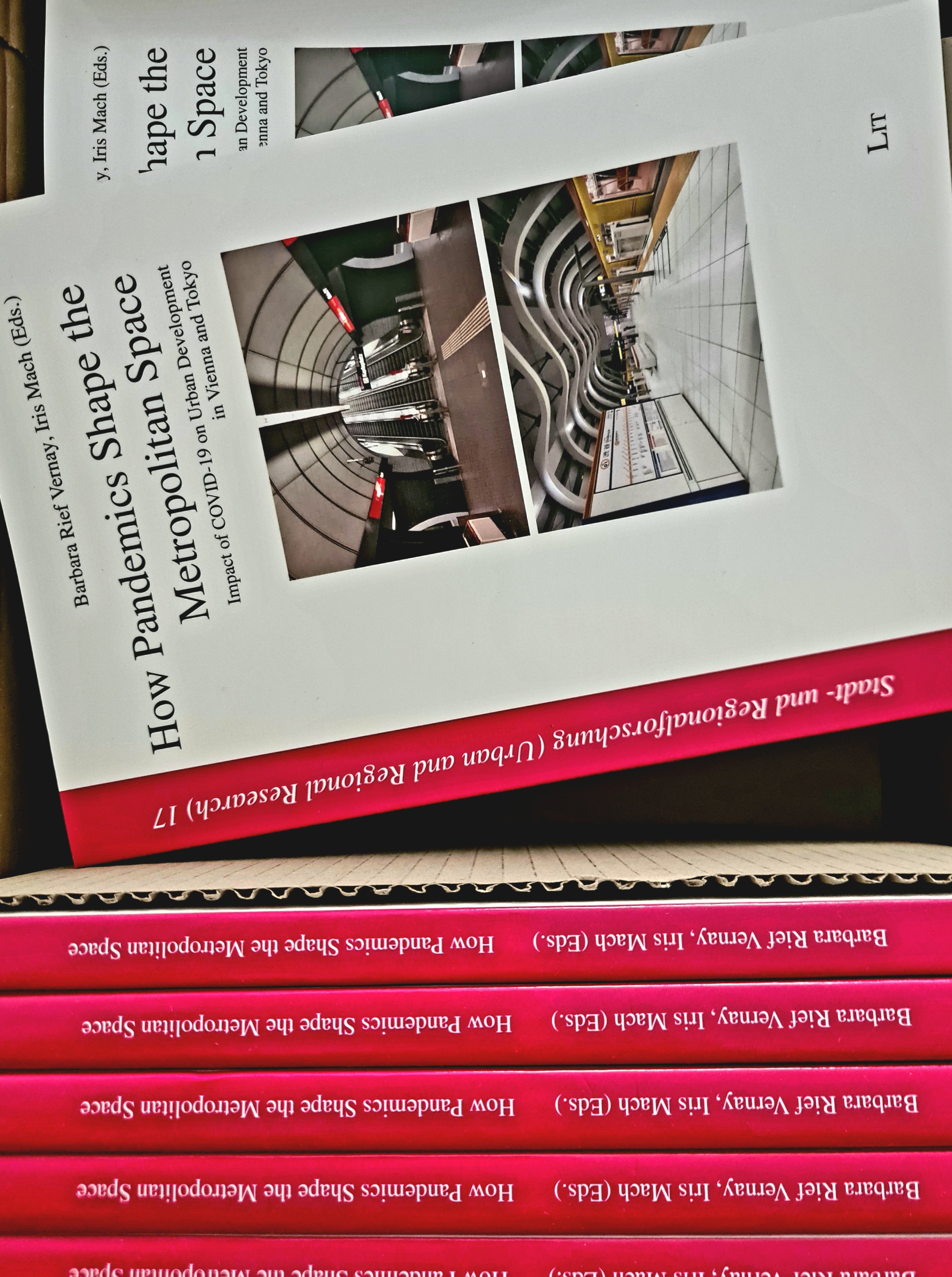
The study was published recently as a book chapter in “How Pandemics Shape the Metropolitan Space. Impact of COVID-19 on Urban Development in Vienna and Tokyo.” (LIT Publishers). The book examines the impact of the recent global health crisis on the urban development of Vienna and Tokyo. Contributions from fields such as regional, landscape or transport planning as well as urban sociology and cultural anthropology by researchers from Japan and Austria show that the impact of the pandemic on urban space in these capitals was both immediate and long-term. At the same time, they reveal that historical and cultural contexts influence the way cities dealt with the challenges of COVID-19. The publication was edited by Barbara Rief Vernay and Iris Mach – both from the Japan Austria Science Exchange Center (JASEC) at TU Wien.
Dembski, Fabian (2023). Displaced Youth and Culture: Informal Art and Culture During the COVID-19 Measures in Vienna and Future Potentials for Public Space. In: Rief Vernay, Barbara; Mach, Iris (Ed.). How Pandemics Shape the Metropolitan Space. (141−156). Vienna: Lit Verlag. (Stadt- und Regionalforschung / Urban and Regional Research).
Research within the framework of TU Wien, Japan Austria Science Exchange Center (JASEC), Tallinn University of Technology (TalTech), Academy of Architecture and Urban Studies and High-Performance Computing Center Stuttgart (HLRS).
 Fabian Dembski
Leave a comment